A print that looks good on screen can get lost on the wall. Usually the spot is to blame: too small above a sofa, landscape on a narrow strip, dark in a dark corner, or just too high. A few measurements and one formula prevent that. Below are the rules, with pieces from the collection as examples.
Size first: two thirds of the furniture
Above a sofa, a bed or a sideboard you want a print that covers about two thirds to three quarters of the width of that piece of furniture. Narrower and the print looks lost. Wider and it presses down on the furniture.
A worked example. A sofa of 210 cm asks for something 140 to 160 cm wide. You will not get there with one print: our files stay sharp up to about 90 × 60 cm, as explained in Printing a digital artwork. There are two ways to fill the width anyway:
- One 90 × 60 print in a frame with a wide mat. With ten centimetres of board all round and a narrow frame you reach about 115 cm.
- Two or three pieces side by side. Two frames 70 cm wide with 8 cm between them come to 148 cm.
On an empty wall without furniture in front of it, something similar applies: leave at least a hand's width more wall on either side than the print itself is wide, or it starts to look like wallpaper.
Landscape or portrait
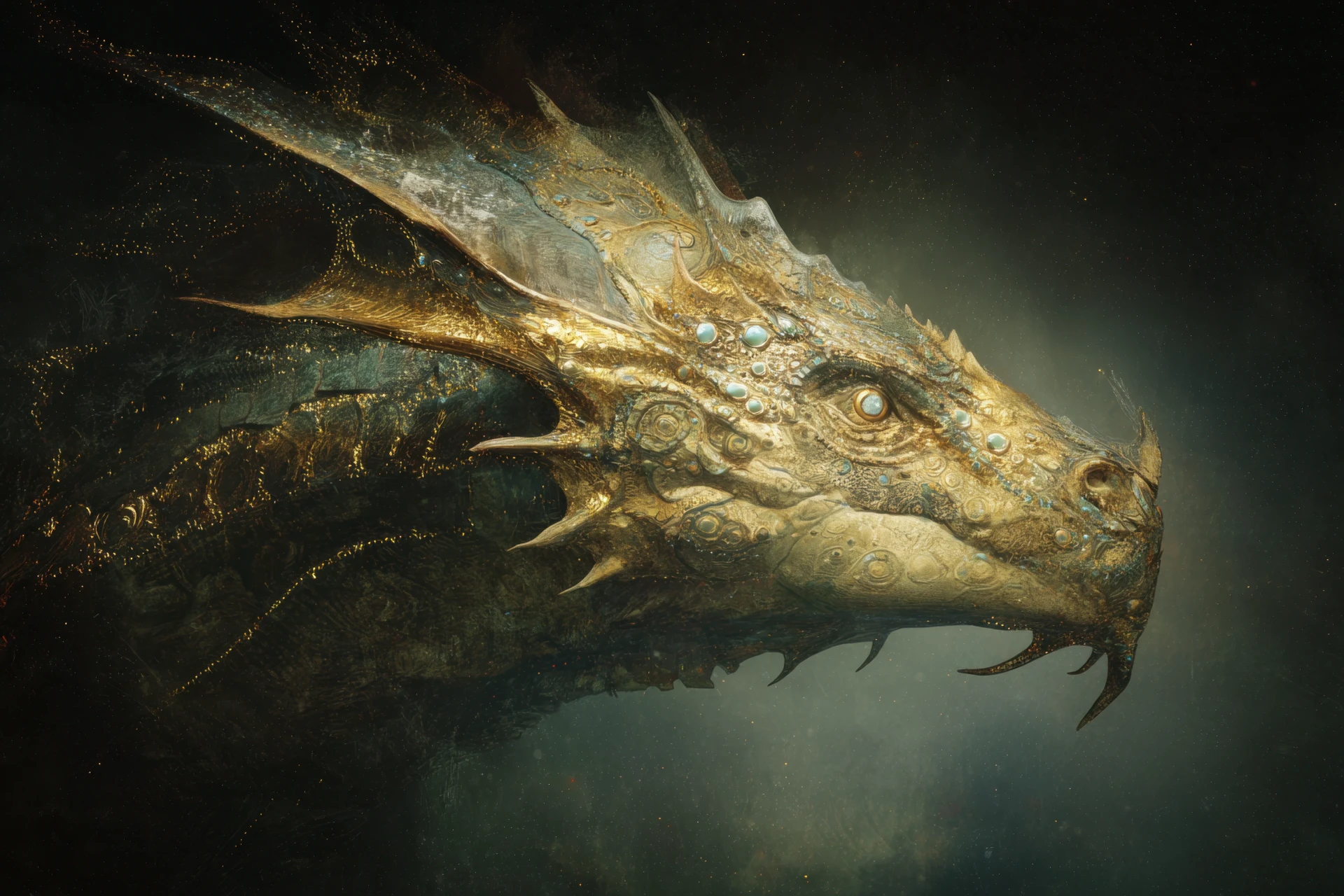
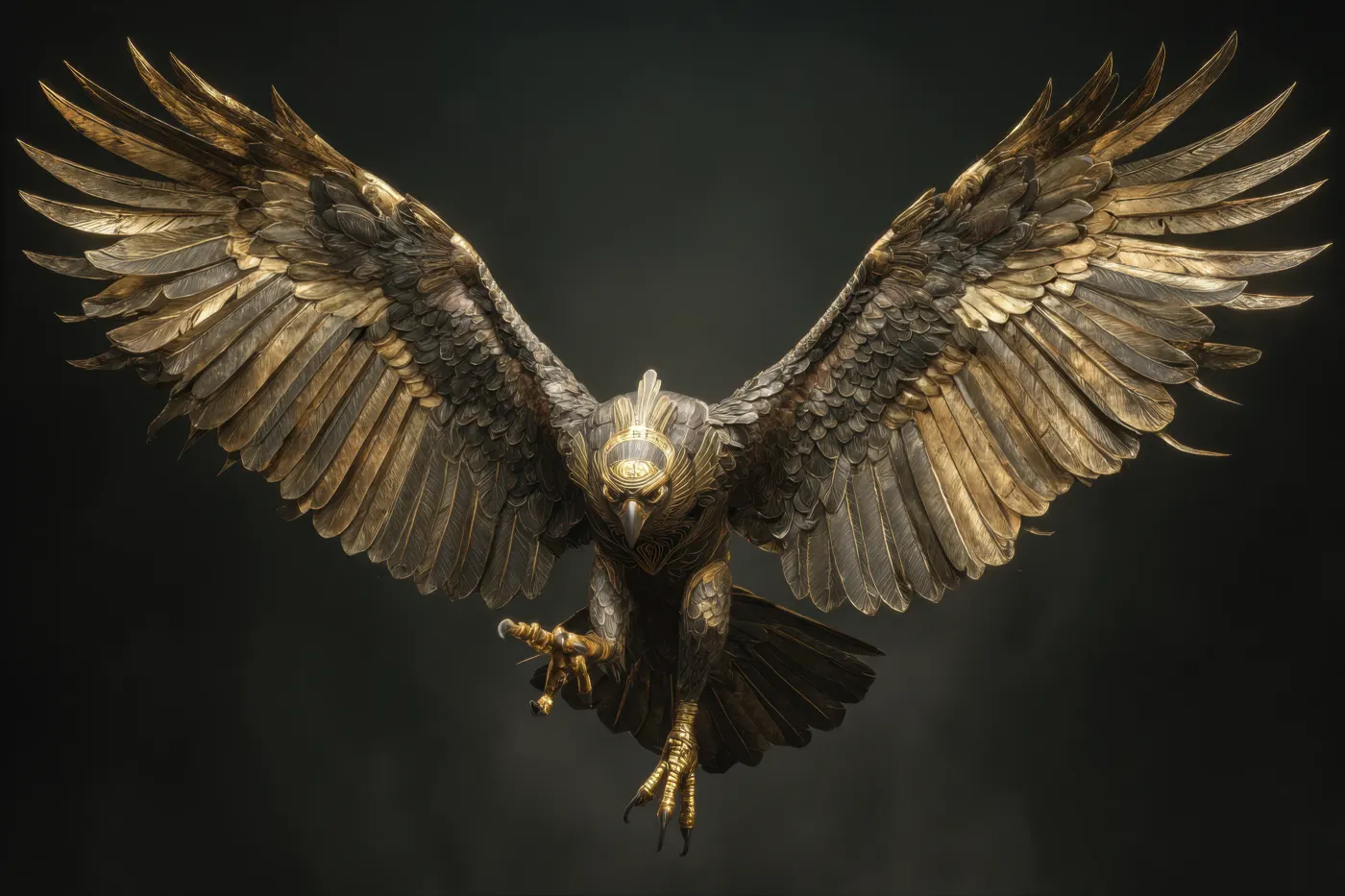
A landscape piece fills the width above furniture by itself. Horus in flight was made for it: the wings run horizontally across the whole image. The Grizzly bear fills the frame with its shoulders and works best printed large. The Leviathan, coiled in a single S-curve, is landscape too and needs room.
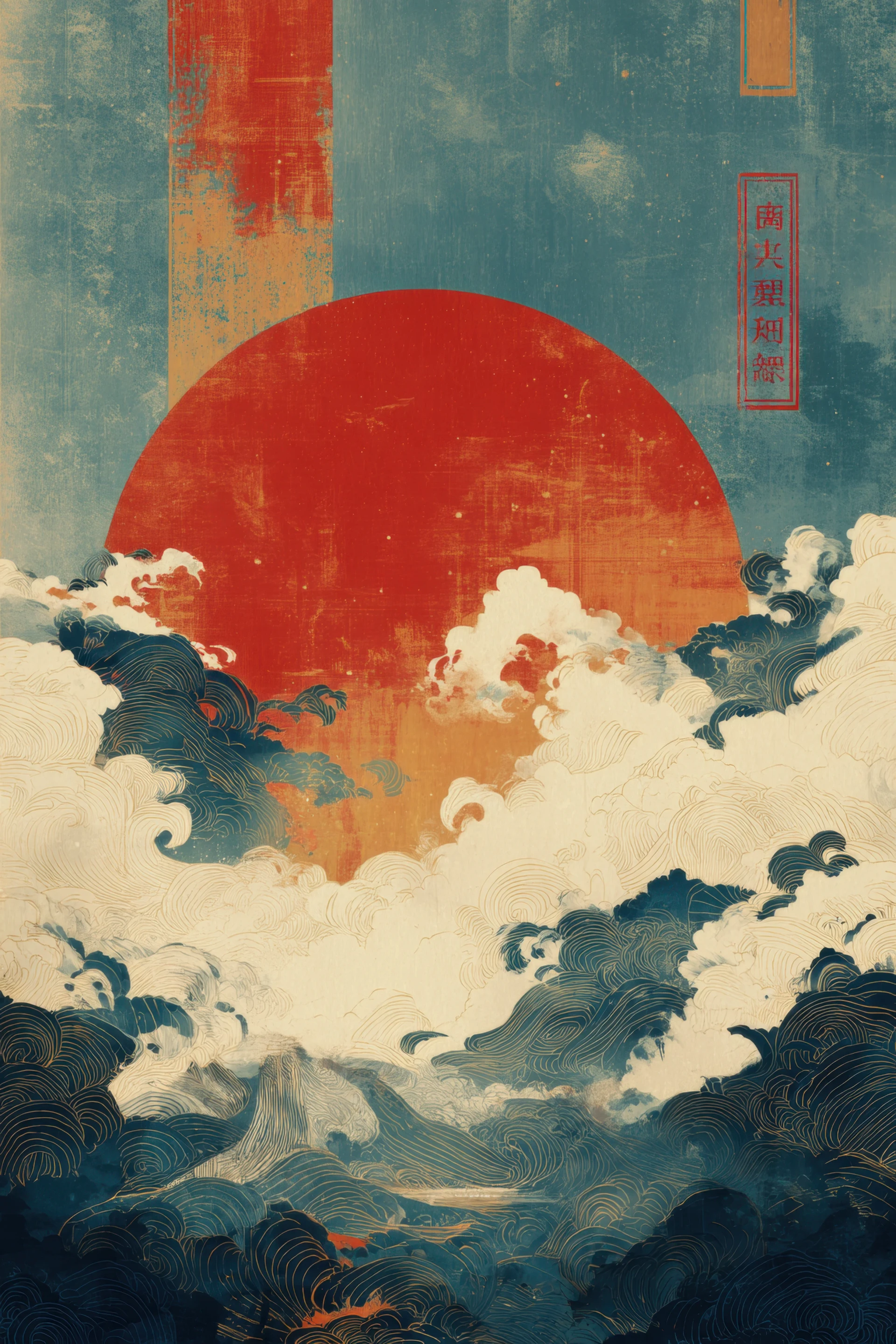
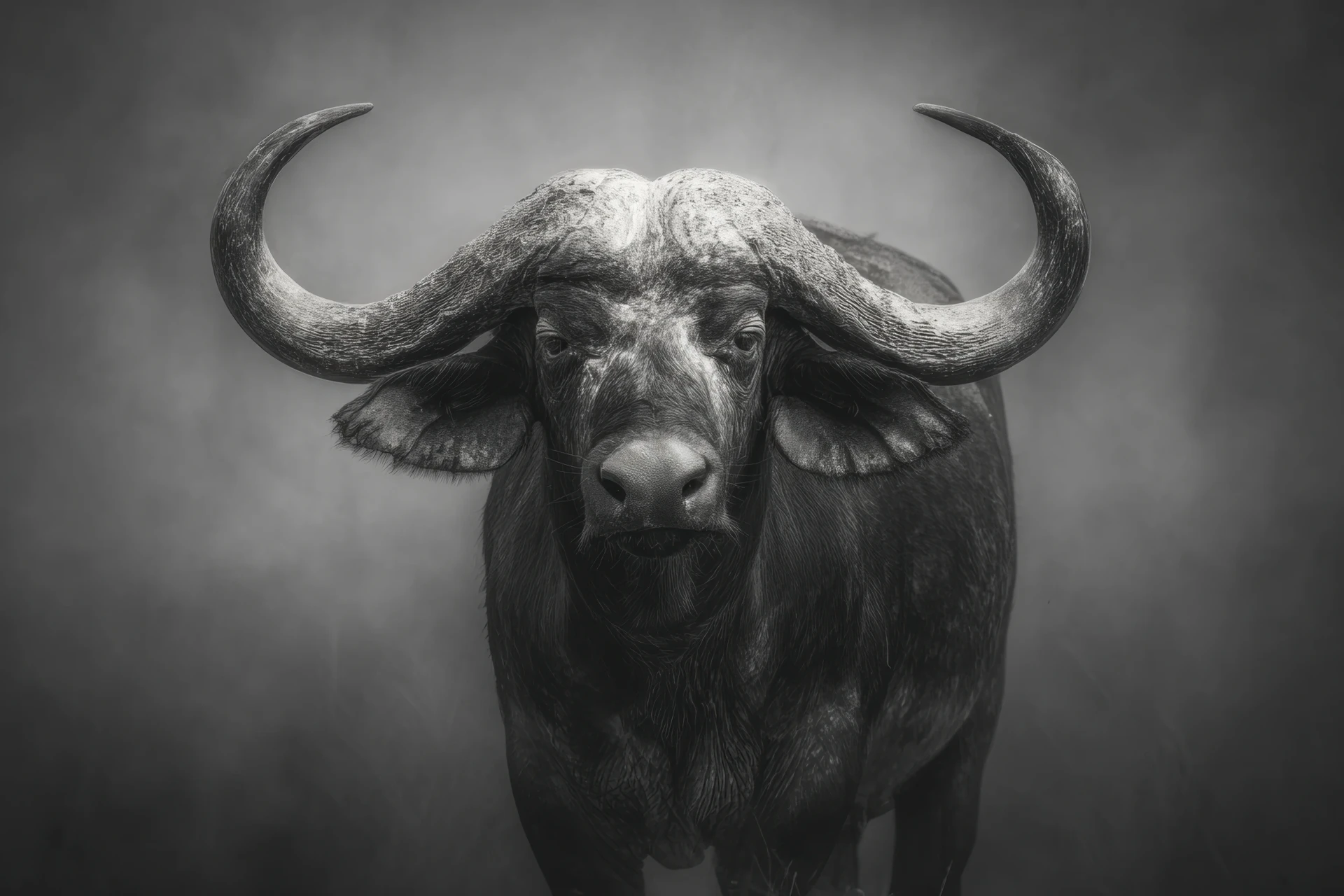
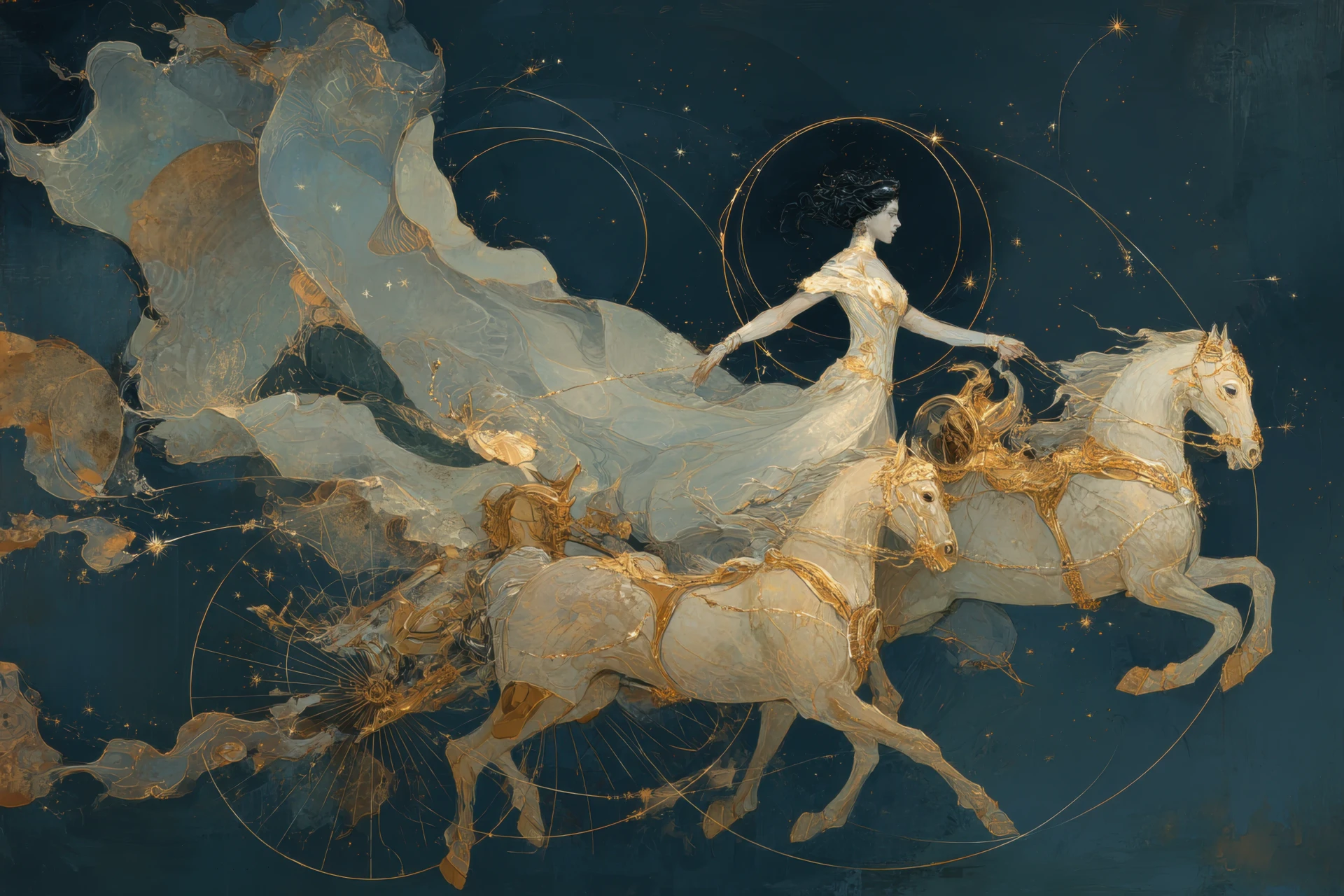
Next to a door, between two windows or in a hallway, the space is tall and narrow. Choose a portrait piece there. The Bull is portrait, with the horns reaching the edge. Phoenix in the sun ring has a tail that fans out downwards and suits a tall wall. Persephone, Athena and the Hydra with seven heads are portrait as well. The Hydra's heads fan out wide, but the file itself is portrait.
A portrait piece above a sofa can work, but only if it is tall enough to hold its own. Two portrait pieces side by side often work better there than one.
How high?
The standard rule: the centre of the print at eye level, between 145 and 155 cm (57 to 61 in) from the floor. Museums hang this way, and it works at home too. A common mistake is hanging too high, because we tend to fill a wall from the top.
There are exceptions:
- Above a sofa or bed the bottom of the frame sits 15 to 25 cm (6 to 10 in) above the backrest or headboard. Any higher and the print floats away from the furniture.
- Above a sideboard or table leave 15 to 30 cm clear, enough for a lamp or a vase without it touching the print.
- In a dining room you look at it seated, so the centre can be a little lower, around 135 cm.
- Along a staircase follow the slope. Measure eye level from the step the print hangs above.
The Sphinx from below is the exception that proves the rule. It is seen from beneath, so the figure seems to rise above you. Hang it above eye level and the effect works.
Working out the nail height
Centre at 150 cm is easily said, but the nail is not at the centre of the frame. Turn the frame over, pull the hanging wire or bracket taut upwards as it will hang on the nail, and measure from that point to the top of the frame. Then:
nail height = desired centre height + half the frame height − distance from hanging point to top
Example: a frame 60 cm tall, the wire pulled taut reaches 8 cm below the top, and you want the centre at 150 cm. The nail goes at 150 + 30 − 8 = 172 cm. Two nails or hooks side by side, each a third of the way in, keep a frame straighter than one.
Light and dark
A dark piece on a dark wall disappears. The Buffalo is one that asks for a light wall. If you have a dark wall, deep green or navy, there are two answers: a white mat that lifts the image off the wall, or a piece with a lot of gold or light in it. Bastet with her golden disc and Selene before her golden crescent glow against dark.
The Forest god is the exception: dark green and made for a shady corner, where it slowly emerges from the wall.
For a light room there are the softer pieces: the Dove of wood and mother of pearl, the Deer with blossom antlers, the Horse from the black and white series.
Where the light comes from
Daylight from the side is the best light for a print. Hades hangs best where the light comes from the side; then you see the cracks in the stone. Directly opposite a window you get reflections in the glass, and in direct sunlight every ink fades in time.
If you add a spotlight, aim it at an angle of about 30 degrees from the wall. Steeper and the top of the frame casts a shadow over the image. Flatter and you look straight into the reflection. A warm white LED of 2700 to 3000 kelvin makes the gold in pieces such as Thoth and Zeus glow. LED lamps give off almost no ultraviolet or heat, so the print does not suffer.
More than one piece
If you hang a series, choose pieces from one collection or with the same tone. In the black and white series the Lion, the Tiger and the Gorilla all look straight at you, in the same greys. All three are landscape, so in three identical frames side by side they read as one group.
There are two ways to hang a group:
- In a grid: identical frames, identical gaps, top edges in line. Calm and tight, good for a series like the one above.
- Freely: different sizes mixed together, around an imaginary centre point at eye level. Keep the gaps between frames equal, even when the frames differ. That holds the group together.
Keep 5 to 8 cm (2 to 3 in) between frames. Line up the top edges, or the centres if the sizes differ.
With pieces in profile, watch the direction of the gaze. Freya, Selene, Fenrir and the Lion in the wind look sideways. Hang them so they look into the room or towards each other, not at the door frame or the corner. A portrait that looks off the wall pulls your eye out with it.
Room by room
- Bedroom: calm pieces with little hard contrast. Bison in the fog has a lot of grey and hangs quietly.
- Study: something with a gaze. The Tiger, eyes straight into the lens, is a strong piece above a desk.
- Children's room: the Penguin is the most cheerful piece in the black and white series, the Red panda the lightest.
- Centre of an empty wall: the Sphinx with two heads is fully symmetrical and holds its own, right in the middle.
- Next to other art: the Zebra and the Gold leaf falcon are calm or graphic enough to hang beside almost anything.
Before you drill
Cut the frames out of paper or old newspapers at full size and tape them to the wall with painter's tape. Leave them up for a day and walk past a few times. You will see straight away what is too high or too small, and it costs nothing. Then mark the nail points on the paper, drill through it and pull it away.
Use a cavity wall anchor or a special plasterboard hook for drywall, and a plug that matches the screw for masonry. A 60 × 90 print in a wooden frame with glass easily weighs four or five kilos. Measure twice before you drill.